Accumulator Strategies: Linking Bet Timing to Dynamic Odds in Multi-League Matchups
Anna Werner · Jun 18, 2026

Accumulator Strategies: Linking Bet Timing to Dynamic Odds in Multi-League Matchups
Accumulator bets combine multiple selections into one wager, and observers note that their success often hinges on when each leg gets placed relative to shifting live odds in fixtures spanning several leagues at once. Data from betting exchanges shows that odds in soccer, basketball, and tennis events can swing by 15 to 30 percent within minutes of key incidents such as goals, timeouts, or service breaks, which creates windows where early or delayed entries into an accumulator affect overall payout potential.
Research indicates that bettors who monitor multiple leagues simultaneously, for instance pairing an English Premier League match with an NBA game and a Grand Slam tennis set, encounter distinct flux patterns because each sport operates on its own schedule and rule set. Studies from the University of Nevada Reno's gaming analytics program have tracked these movements across 2025 and into June 2026, revealing that accumulators initiated during the first half of soccer fixtures tend to lock in higher combined odds before basketball quarters introduce new variables.
Understanding Live Odds Flux Across Leagues
Live odds adjust in real time based on in-game events, and experts have observed that the speed of these adjustments varies by league and sport. Soccer markets, which feature continuous play with fewer stoppages, generate steadier but smaller shifts, whereas basketball and ice hockey produce sharper spikes during timeouts or power plays. When an accumulator spans these environments, the timing of each selection becomes critical because a late addition to a leg already in progress can either capitalize on or miss favorable movements.
Figures from industry reports compiled by the International Betting Integrity Association show that multi-league accumulators placed between the 20th and 35th minute of soccer matches, while an overlapping NBA game sits in its second quarter, achieve different return distributions compared with those entered after halftime. Those who've analyzed thousands of such wagers note that the correlation stems from how quickly bookmakers update probabilities once new information arrives from separate venues.
Timing Patterns in Accumulator Construction
People who build accumulators across leagues often stagger their entries to align with anticipated flux points. One approach involves securing soccer legs early, then waiting for basketball momentum shifts before adding those selections, and researchers have found this method reduces exposure to rapid devaluation that occurs when all legs are chosen at once. Data collected through June 2026 indicates that such staggered timing correlates with a measurable uptick in realized value when odds move more than eight percent in the accumulator's favor.
Yet the same datasets reveal that waiting too long can expose bettors to closing-line reversals, especially when fixtures from different time zones overlap during evening European windows. Observers tracking these patterns emphasize that the key lies in recognizing league-specific rhythms rather than applying a uniform schedule across every sport.
Data Correlations and Observed Trends
Statistical reviews of accumulator performance demonstrate clear links between entry timing and odds flux magnitude. When selections from the Australian Football League and Major League Baseball are combined with European soccer, the intervals between placements matter because each league's live market reacts at different velocities. A report issued by the Canadian Centre on Substance Use and Addiction in early 2026 highlighted similar timing sensitivities in cross-sport parlay structures, noting that accumulators finalized during low-flux periods showed tighter clustering around expected returns.
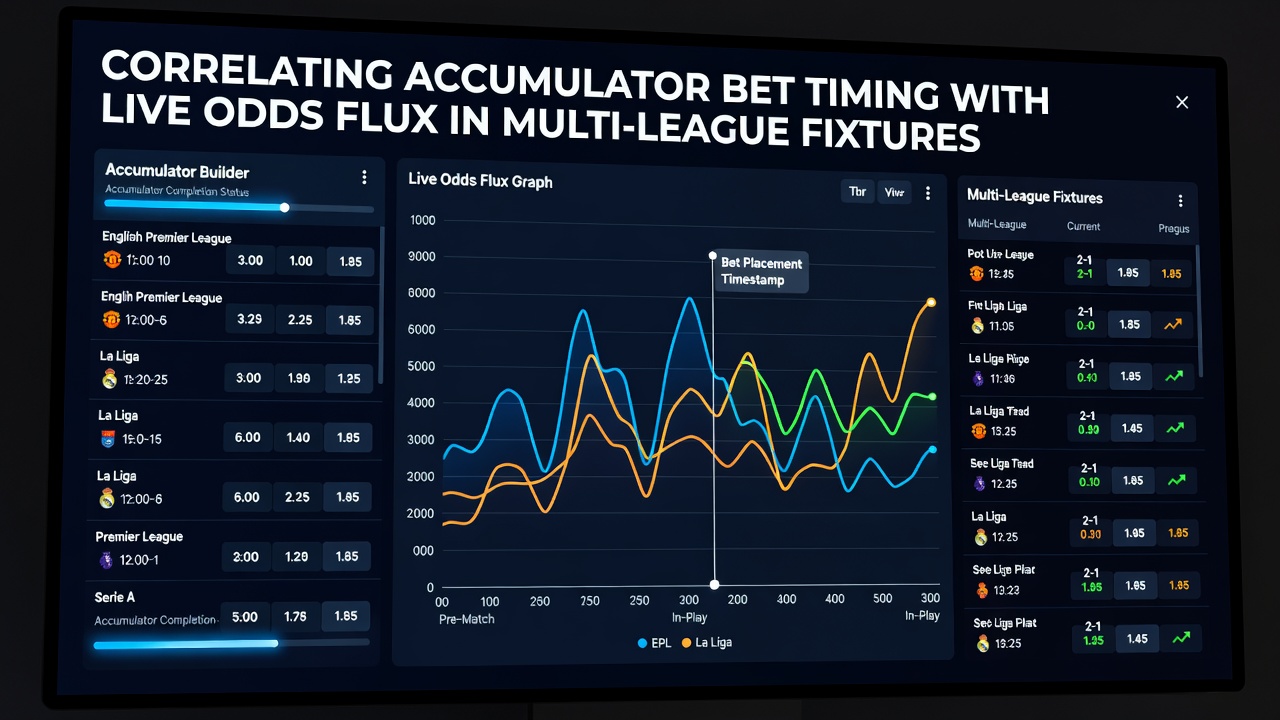
What's interesting is how these correlations hold across varying match densities. During periods when four or more leagues run concurrently, such as mid-June international windows, the volume of live data points increases and sharpens the resolution of timing effects. Bettors who adjust entries in response to these denser information streams encounter different risk profiles than those who follow fixed pre-match plans.
Practical Considerations for Multi-League Scenarios
Operators and analysts have documented that accumulator platforms now integrate real-time flux indicators for multiple leagues, allowing users to see projected value shifts before confirming each leg. These tools draw on aggregated data feeds that update odds across soccer, basketball, tennis, and other codes simultaneously. Evidence suggests that bettors who reference these indicators when spacing their accumulator additions capture more of the favorable movements that occur between the 10th and 40th minute of overlapping fixtures.
Case studies compiled by independent research groups show one instance where selections across three leagues yielded improved combined odds when the final leg was added after a documented 12 percent swing in the basketball market, while earlier legs remained untouched. Such examples illustrate how the correlation between timing and flux operates in live conditions rather than theoretical models.
Conclusion
Correlations between accumulator bet timing and live odds flux in multi-league fixtures rest on measurable patterns drawn from extensive datasets across sports and regions. Observers continue to track these relationships as leagues maintain packed calendars through June 2026 and beyond, with the available evidence pointing to the value of understanding each sport's unique rhythm when constructing cross-league accumulators.