Capital Transitions Between Sports Wagering Venues and Gaming Tables
Eden Simmons · Jun 21, 2026

Capital Transitions Between Sports Wagering Venues and Gaming Tables
Operators and players alike track how funds move across different gambling formats, with data showing increased activity when participants allocate portions of their bankrolls from event-based wagers to table and machine play within the same session windows. Reports compiled through mid-2026 indicate that integrated digital platforms facilitate these movements by allowing instant transfers without additional verification steps in many licensed jurisdictions.
Studies released in June 2026 by regional authorities highlight patterns where bettors who shift smaller increments every 45 to 90 minutes maintain longer overall engagement times compared with those who remain in one category. Figures from the American Gaming Association reveal that multi-format participation rose 12 percent year-over-year in states with unified account systems, reflecting smoother capital movement between verticals.
Mechanics of Cross-Format Fund Movement
Digital wallets linked to both sportsbook and casino sections enable transfers that complete in seconds, whereas separate accounts historically required manual withdrawals and redeposits that interrupted momentum. Observers note that operators offering single-balance models reduce friction points, allowing users to redirect remaining stakes from a completed sports event directly into roulette or blackjack sessions without leaving the application.
Payment processors supporting instant rails such as certain e-wallets and prepaid cards further streamline these adjustments, while traditional bank transfers introduce delays of several hours that can break session continuity. Research conducted across North American markets shows participants using instant options complete an average of 3.2 format changes per visit, extending total time on site by roughly 40 minutes compared with single-format users.
Timing Considerations and Session Structuring
Participants often monitor live event outcomes alongside table minimums, adjusting allocations when odds shift unfavorably or when casino promotions align with remaining balances. Data indicates that those who pre-set percentage thresholds for movement—such as moving 30 percent after a sports outcome—experience fewer interruptions than those deciding amounts reactively.
Platform analytics from multiple operators demonstrate that evening hours see higher rates of these transitions, coinciding with the conclusion of major sports fixtures and the opening of prime casino table hours. June 2026 regulatory summaries from Canadian provincial bodies noted similar clustering patterns in provinces with combined licensing frameworks.
Platform Features Supporting Fluid Allocation
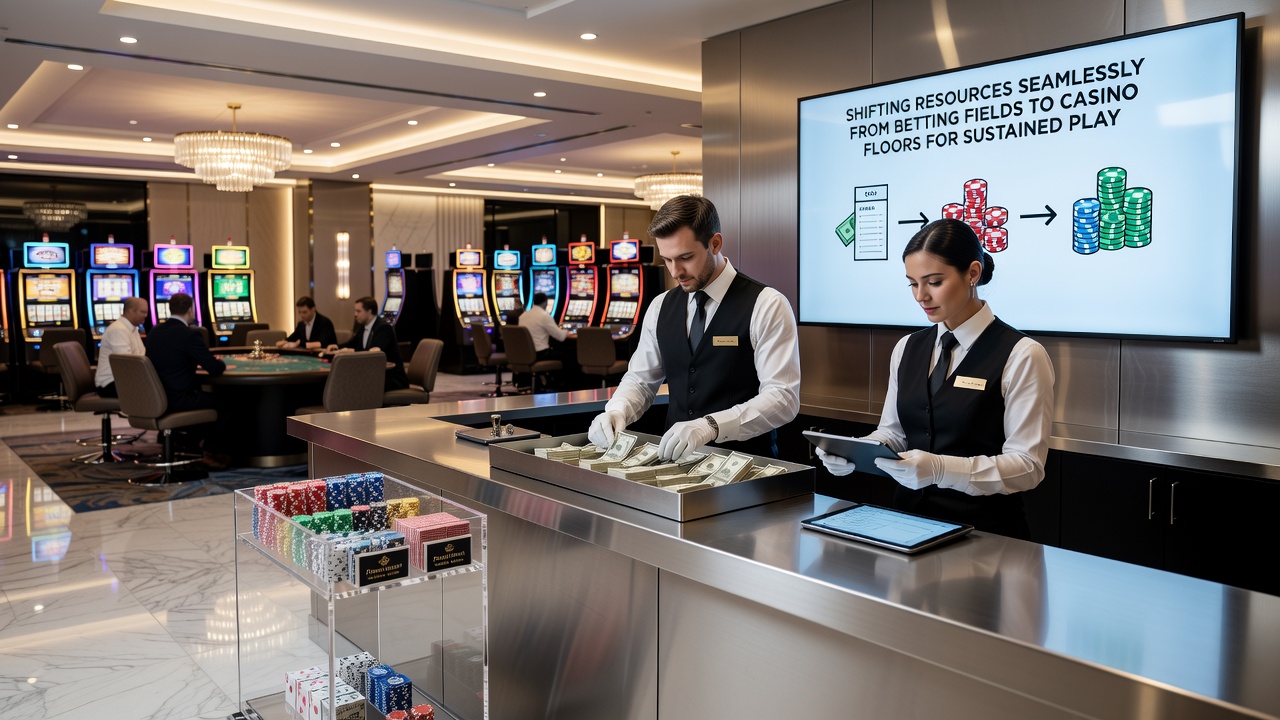
Many systems now include toggle functions that display available balances across categories on a single screen, reducing the steps needed to reassign funds. Some applications incorporate predictive prompts based on historical user patterns, suggesting transfer amounts when a sports wager settles or when casino session metrics reach certain thresholds.
Industry reports from the Australian Gambling Research Centre document that venues providing these interface enhancements record higher retention metrics across both product lines. Automated limit tools also help maintain predetermined budgets during transitions, preventing unplanned overspending when momentum carries users between formats.
Regulatory Context and Operational Standards
Licensing bodies in several regions require clear disclosure of transfer times and associated fees, ensuring participants understand any costs before executing movements. Compliance frameworks updated through early 2026 emphasize real-time balance visibility to support informed decision-making during extended play periods.
Technical standards increasingly mandate API compatibility between sportsbook and casino modules, allowing third-party developers to create unified dashboards that aggregate activity across both areas. These requirements have prompted operators to standardize data formats, which in turn reduces errors during cross-format reallocations.
Conclusion
Integration between sports wagering and casino environments continues to evolve through platform design, payment infrastructure, and regulatory alignment. Available figures from multiple jurisdictions illustrate measurable increases in session duration when capital shifts occur without significant barriers, while operational standards maintain safeguards around transparency and user control. Continued monitoring of these dynamics will track how further technical refinements influence participation patterns across combined gambling offerings.