Charting Reward Accumulation Pathways in Integrated Casino Player Clubs
Theo Simmons · Jul 28, 2026
Charting Reward Accumulation Pathways in Integrated Casino Player Clubs
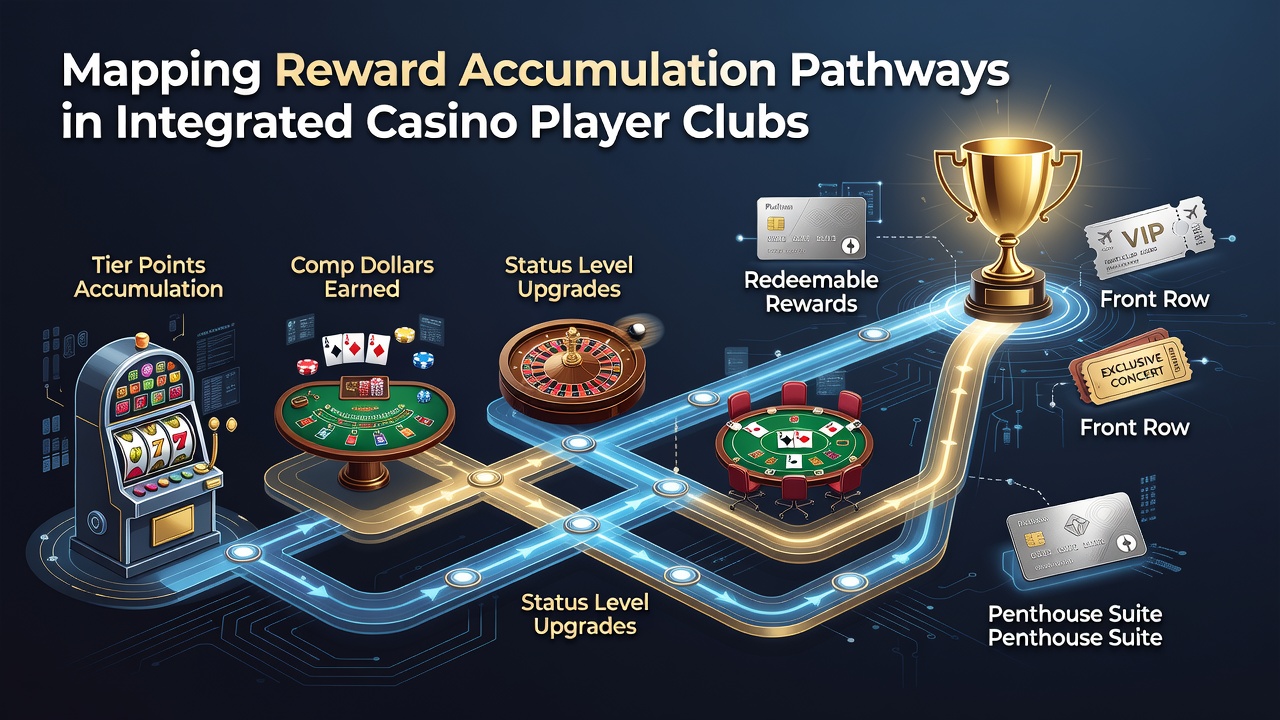
Integrated casino player clubs operate through centralized databases that track activity across slots, table games, and other amenities while converting play into tiered rewards, and these systems rely on mapped pathways that connect specific actions to point accrual rates. Operators collect data on coin-in volumes, time spent at tables, and ancillary spending so that algorithms assign values based on predefined formulas, which in turn determine comps such as free play, hotel stays, or dining credits.
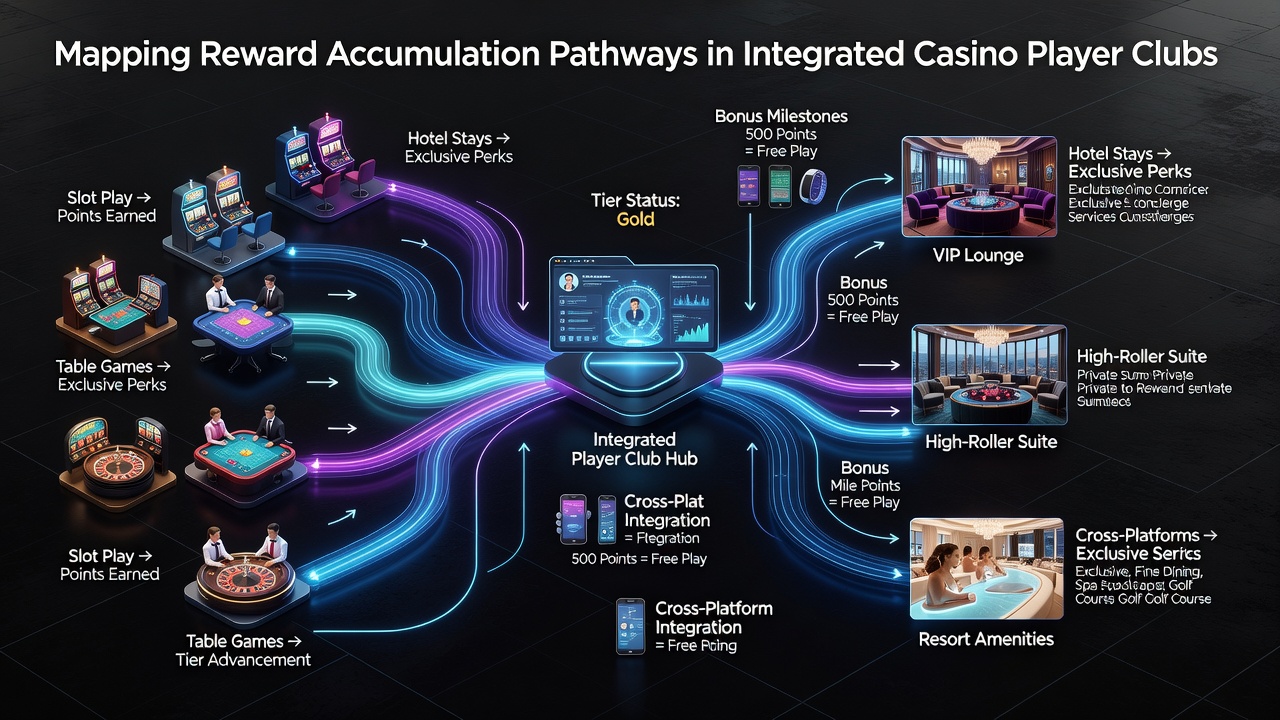
Pathways begin at the enrollment stage where a player receives a card linked to a unique identifier, after which every recorded transaction feeds into a central ledger that updates balances in real time. Different game types feed separate channels: slot machines contribute through theoretical hold percentages and actual coin-in figures, whereas table games use average bet size multiplied by hands per hour to estimate contribution. These channels merge at the aggregation layer where total points determine tier status and unlock escalating benefit levels.
Data Integration Across Multiple Venues
Casino groups with properties in several locations merge records through shared servers that recognize the same player identifier regardless of site, which allows accumulation to continue uninterrupted during travel between properties. In July 2026 several major operators expanded these linkages to include sports betting terminals and online platforms, creating continuous pathways that span physical and digital environments. The merged datasets support predictive models that estimate future play volume and adjust reward offers accordingly, while regulatory frameworks in multiple jurisdictions require operators to maintain audit trails for all point calculations.
Analysts examine the flow by segmenting player cohorts according to primary game preference and average session length, revealing that high-volume slot players accumulate points along steeper gradients than table players who spread activity across longer periods. This segmentation informs the placement of promotional kiosks and targeted direct mail campaigns that direct individuals toward underutilized pathways.
Algorithmic Mapping of Point Values
Mathematical models assign point multipliers based on game volatility and house edge, so that a player inserting the same dollar amount on a high-volatility slot receives fewer base points than one using a low-volatility machine with higher theoretical return. Table game pathways incorporate dealer-tracked metrics such as average bet and hands dealt, which feed into the same ledger after verification against surveillance records. Observers note that these layered calculations prevent point inflation while maintaining perceived fairness across game categories.
External research from the University of Nevada, Las Vegas Center for Gaming Research indicates that integrated systems reduce player attrition by aligning reward timing with individual spending cycles, and similar patterns appear in reports issued by the New Jersey Division of Gaming Enforcement. These sources document how mapped pathways allow operators to shift promotional budgets toward segments that demonstrate consistent cross-game activity rather than single-channel concentration.
Tier Progression and Reward Unlocking
Accumulation pathways converge at tier thresholds where cumulative points trigger status upgrades that multiply future earning rates, creating feedback loops that accelerate reward collection for retained players. Once a tier activates, additional channels open such as priority event access or personalized host assignments, each tied to further point milestones. Data from multi-property operators shows that players who cross into higher tiers maintain elevated play volumes for an average of fourteen months before any plateau occurs.
Seasonal adjustments recalibrate point values during promotional windows, allowing operators to steer activity toward slower periods without altering base game mathematics. These temporary maps overlay the permanent structure and expire automatically, preserving the integrity of long-term accumulation records.
Conclusion
Integrated casino player clubs rely on precisely mapped reward pathways that convert diverse gaming actions into unified point balances and tier benefits, supported by real-time data integration across venues and game types. The structure accommodates regulatory oversight through transparent calculation rules while enabling operators to personalize offers based on observed behavioral patterns. Continued expansion of cross-platform linkages through 2026 has extended these pathways into new verticals, sustaining the core mechanism that connects individual play to collective reward systems.