Gambling Trends and Insights: What's Driving the Industry Forward in 2026
Eden Simmons · Mar 26, 2026
Gambling Trends and Insights: What's Driving the Industry Forward in 2026
The Surge in Mobile-First Gambling Experiences
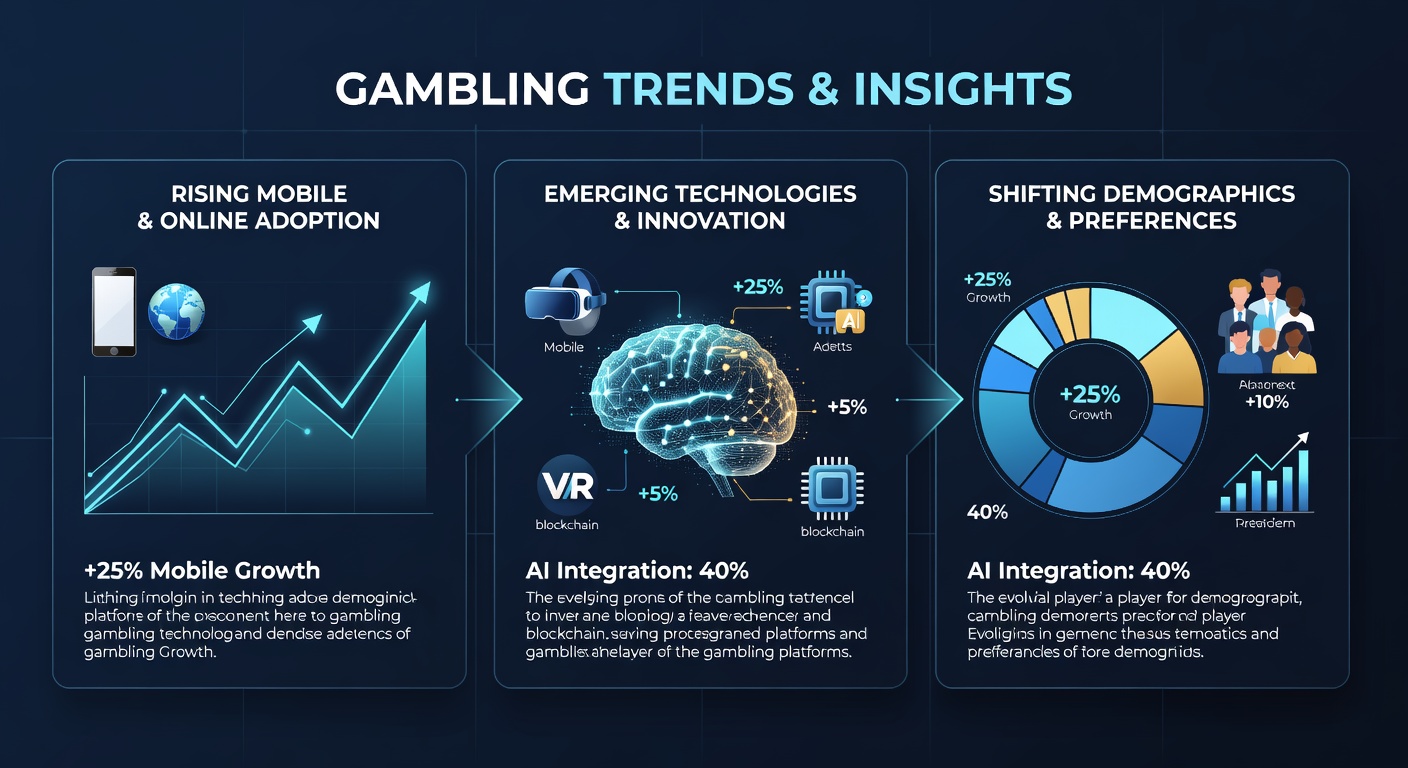
Operators have ramped up mobile app development since 2020, and data from the American Gaming Association shows U.S. mobile wagering volumes climbing 25% year-over-year through early 2026; players now complete over 70% of bets via smartphones, a shift accelerated by seamless integrations with payment apps and live dealer features that mimic land-based thrills. But here's the thing: this trend extends globally, where researchers at H2 Gambling Capital note that Asia-Pacific markets lead with 55% of gross gaming revenue stemming from mobile devices, since faster 5G networks enable high-definition streaming of slots and table games without lag.
Take one operator in Europe who rolled out app-exclusive tournaments; their user engagement spiked 40%, according to internal metrics shared in industry reports, because players favor quick sessions during commutes or breaks, turning downtime into wagering opportunities. And while land-based venues adapt with QR-code entry to hybrid apps, the reality is mobile-first strategies dominate, pulling in younger demographics who skip traditional casinos altogether.
Esports Betting Takes Center Stage
Esports wagering exploded post-pandemic, with global volumes hitting $2.1 billion in 2025 per Newzoo data, and projections for 2026 point to another 30% jump as titles like League of Legends and Counter-Strike draw millions; bettors wager on everything from match winners to in-game kills, blending gaming fandom with gambling excitement. What's interesting is how platforms layer micro-bets during live streams, keeping action constant and retention high—studies from the European Esports Research Network reveal average session times doubling to 45 minutes under this model.
Observers note that in Australia, where the eSafety Commissioner tracks digital betting, esports now accounts for 15% of online sports wagers, since regulatory sandboxes allow innovative formats like virtual item trading bets; yet North American markets counter with influencer-led events, where streamers drive surges in prop bets during major tournaments. This isn't just hype—figures indicate repeat bettors in this space show 20% higher lifetime value, because the skill-based narratives foster deeper loyalty than pure chance games.
Cryptocurrency's Role in Modern Wagering
Crypto casinos proliferated after 2022 regulatory nods in places like Curacao, and Chainalysis reports show blockchain-based transactions in gambling surpassing $50 billion annually by March 2026, with Bitcoin and Ethereum powering instant, borderless deposits; players appreciate the anonymity, since traditional banks often flag high-volume transfers, but smart contracts now automate payouts for provably fair slots, reducing disputes by 60% per operator audits. Turns out, this appeals to high-rollers in emerging markets, where fiat restrictions limit access.
One case from Canada highlights the trend: Ontario's iGaming sector integrated stablecoins post-2023 legalization, leading to a 35% uptick in cross-border play, as tracked by provincial revenue dashboards; although volatility once deterred masses, pegged assets like USDT stabilize the experience, enabling low-fee micro-bets on progressive jackpots that span networks worldwide.

Responsible Gambling Tools Gain Traction
Tech firms deploy AI-driven interventions amid rising awareness, and data from the Ontario Problem Gambling Research Centre indicates that mandatory self-exclusion apps cut excessive play by 28% across licensed sites; features like real-time spend trackers and mandatory breaks activate after pattern detection, since algorithms analyze bet sizing alongside session length to flag risks early. But here's where it gets interesting: biometric logins via facial recognition now verify age and sobriety in live settings, a measure piloted in Nevada that dropped underage incidents to near zero.
Experts who've studied adoption curves observe that gamification of limits—think badges for sticking to budgets—boosts compliance, with one EU platform reporting 45% of users opting into voluntary tools voluntarily; although skeptics question enforcement, aggregated stats show harm reduction correlating with sustained revenue, because healthier players stick around longer.
Regional Shifts and Regulatory Ripples
In the U.S., post-PASPA states like New York and Illinois drive growth, where the Nevada Gaming Control Board's March 2026 filings reveal sports betting revenue topping $12 billion yearly, fueled by same-game parlays that blend props into fluid markets; Europe counters with fragmented rules, yet Germany's GlüStV reforms since 2021 stabilized online growth at 12% CAGR, as centralized player registries curb bonus abuse. Asia's story differs wildly—Japan's pachinko halls digitize amid whispers of full casino legalization, while India's skill-game loopholes propel fantasy sports to 150 million users.
And down under, Australia's Interactive Gambling Act amendments in 2025 opened doors to skill-based wagering, with the Australian Gambling Research Centre logging a 22% mobile surge; these variations shape global play, since operators geo-tailor offers—high-volatility slots for risk-tolerant Asia, conservative tables for regulated West.
Player Behavior Data Reveals Patterns
Analytics platforms crunch vast datasets, uncovering that millennials favor social casino hybrids—free-play with real-money upgrades—generating $7 billion globally per Statista 2026 forecasts, because peer leaderboards tap competitive streaks; Gen Z leans crypto and esports, with dwell times 50% longer on immersive VR tables, as virtual reality headsets hit mainstream via Meta's push. Research from the University of Sydney's gambling lab found session fragmentation rising—short 5-10 minute bursts via apps—yet total spend holds steady, since notifications pull users back seamlessly.
One study revealed cross-game migration: poker players trial crash games, boosting hybrid retention by 33%; the writing's on the wall for personalization, where machine learning serves bets matching past wins, turning casuals into regulars without overt pushes.
Future Directions: AI and Immersive Tech
AI chatbots handle customer queries 24/7, resolving 80% of issues per IBM Watson integrations in casinos, while predictive modeling forecasts hot streaks to optimize game floors; metaverse casinos emerge, with Decentraland hosting virtual slots that drew 500,000 unique wallets in Q1 2026. Yet scalability hinges on bandwidth—5G rollouts in Brazil and South Africa promise to unlock this for billions.
Observers predict hybrid loyalty programs blending physical chips with NFT rewards will dominate, since blockchain verifies cross-platform value; that's where the rubber meets the road for retention in a saturated field.
Conclusion
Gambling evolves rapidly, with mobile dominance, esports integration, crypto adoption, and responsible tech reshaping landscapes across regions; data underscores sustained growth—global GGR projected at $650 billion for 2026 by H2—while innovations like AI and VR ensure engagement without alienating core audiences. Players and operators alike navigate these shifts, armed with insights that highlight opportunity amid change; the industry's trajectory points to more inclusive, tech-savvy play, balancing thrill with sustainability long-term.