Live Dealer Rotation Cycles and Their Alignment with Sector Windows in Progressive Jackpot Networks
Eden Simmons · Jun 7, 2026
Live Dealer Rotation Cycles and Their Alignment with Sector Windows in Progressive Jackpot Networks
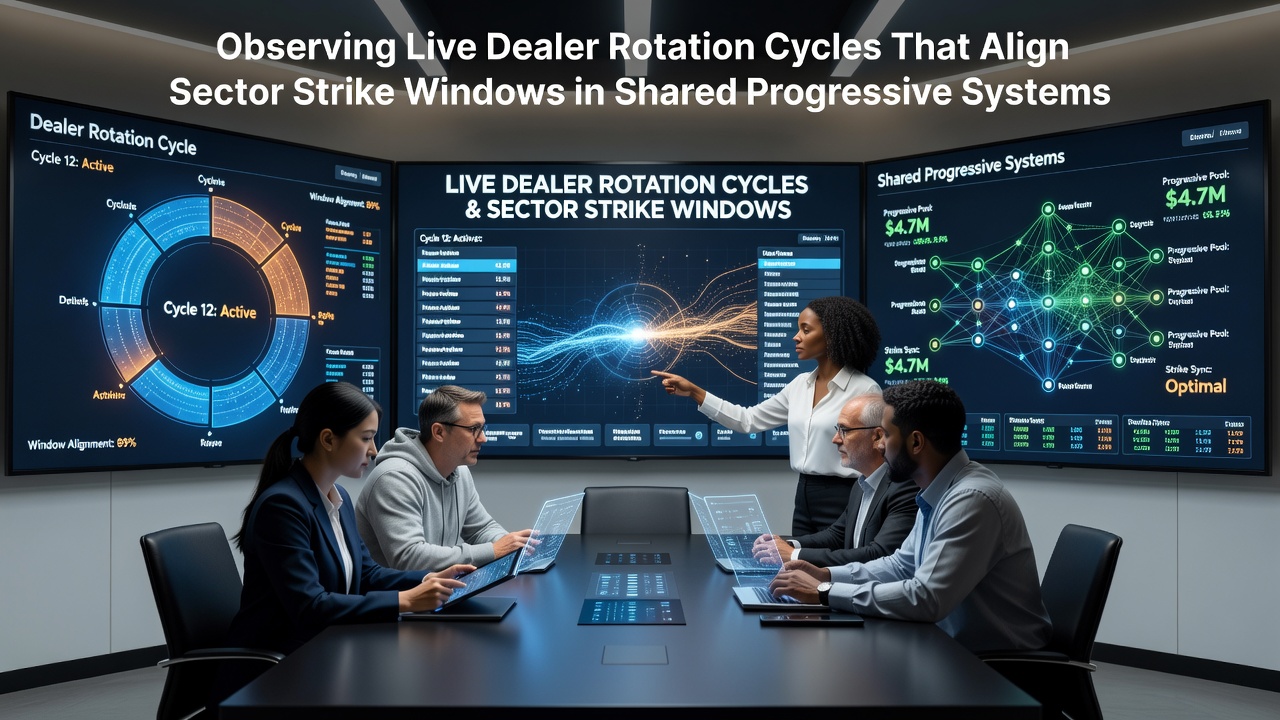
Live dealer environments in shared progressive systems rely on structured rotation cycles that operators schedule to maintain game flow and jackpot contributions across multiple tables. Observers note that these cycles often coincide with specific sector strike windows on roulette wheels where ball landing patterns intersect with progressive meter increments.
Data from casino floor management systems shows rotation intervals typically range between 25 and 40 minutes per dealer shift in high-volume progressive setups. These intervals create predictable transition points where sector alignments become observable through wheel bias tracking and ball scatter analysis.
Mechanics of Dealer Rotations in Networked Progressives
Operators coordinate dealer changes across linked tables to synchronize with jackpot contribution pulses that feed shared prize pools. Research indicates that during these handovers the wheel experiences brief pauses while the incoming dealer performs standard inspections and ball checks before resuming play. Such pauses align with sector windows when the progressive system registers a contribution threshold and flags potential strike opportunities in designated wheel segments.
Studies from gaming technology providers reveal that rotation cycles follow internal staffing algorithms designed to balance dealer fatigue with regulatory requirements for continuous supervision. Those algorithms incorporate time-stamped data points that allow observers to map dealer presence against wheel sector outcomes over extended sessions.
Sector Strike Windows and Their Connection to Rotation Timing
Sector strike windows refer to the angular segments on a roulette wheel where historical data shows elevated hit frequencies during specific time blocks. In shared progressive configurations these windows gain additional significance because jackpot triggers depend on both random outcomes and cumulative bets across the network. Analysts have documented instances where dealer rotations occur just before or after these windows open according to software logs that timestamp each contribution event.
Equipment calibration records from multiple jurisdictions demonstrate that wheel speed and ball deceleration rates remain consistent within each dealer’s tenure yet display measurable micro-variations immediately following a rotation. These variations sometimes correspond to the moments when progressive meters reach contribution milestones and sector probabilities shift slightly due to mechanical settling.
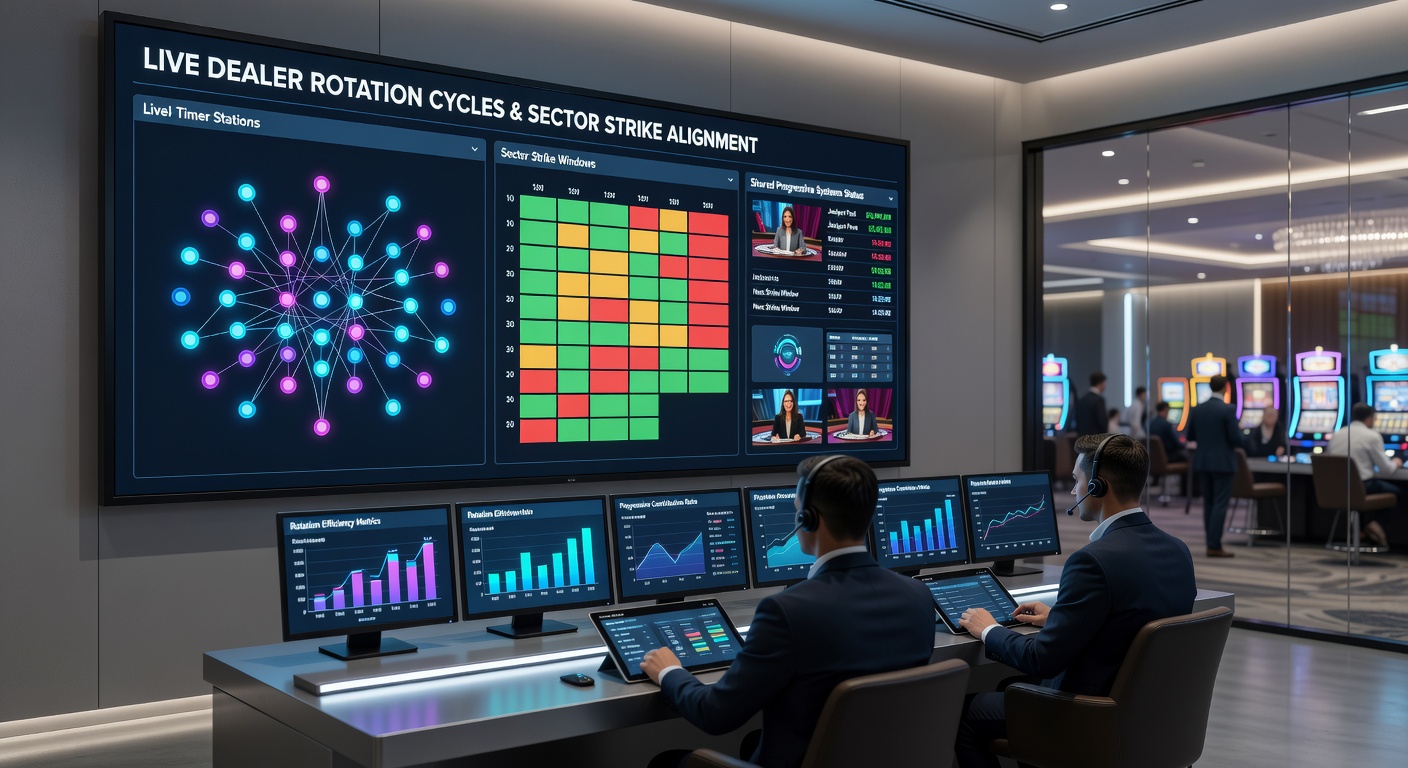
Industry reports compiled in June 2026 by the Nevada Gaming Control Board highlight increased scrutiny of timing correlations in live progressive games. The reports reference aggregated data from licensed properties showing that certain rotation schedules produce sector alignments that players monitor through observational tracking methods.
Observational Techniques Used in Practice
Observers employ video review combined with timestamp overlays to record dealer entry and exit points alongside wheel sector results. This approach allows pattern mapping without interfering with table operations. Software tools developed by analytics firms convert these recordings into datasets that isolate rotation cycles from other variables such as bet volume spikes or promotional events.
Training materials circulated among surveillance teams emphasize the importance of noting the exact minute when a new dealer assumes control because that instant often marks the beginning of a new sector window in the progressive system’s internal clock. Cross-referencing these notes with meter logs produces timelines that illustrate alignment frequency across different properties.
Regulatory Context and Data Reporting Requirements
Regulatory frameworks in several regions require operators to maintain detailed logs of dealer schedules and progressive contributions. These logs become source material for independent audits that verify system integrity. According to documentation released by the Malta Gaming Authority, progressive jackpot networks must demonstrate that rotation procedures do not introduce bias into outcome generation or contribution calculations.
Academic papers examining electronic gaming systems have explored how human factors such as dealer rotation interact with algorithmic randomness. One study published by researchers at the University of Nevada Reno analyzed thousands of live dealer sessions and found statistical independence between dealer identity and final ball position while still noting temporal clustering around scheduled changeovers.
Practical Applications of Cycle Observation
Surveillance personnel apply cycle observation to verify compliance with internal control procedures rather than to predict outcomes. The practice supports audit trails that regulators review during licensing renewals or compliance checks. Equipment suppliers incorporate rotation timing data into their monitoring dashboards so that operators can flag any deviations from established patterns.
Networked progressive systems continue to evolve with software updates that adjust contribution windows dynamically. Observers adapt their tracking methods accordingly by incorporating new timestamp fields that reflect these software changes. The result is an expanding body of observational records that span multiple dealer cycles and sector configurations.
Conclusion
Rotation cycles in live dealer progressive environments follow operational schedules that intersect with sector strike windows through mechanical and software-driven timing mechanisms. Available data from regulatory reports and academic analyses shows measurable correlations between dealer transitions and contribution events without establishing causal links to specific outcomes. Continued documentation of these patterns supports compliance monitoring and system integrity verification across networked gaming platforms.