Position Cycles in Multiplayer Poker: Tracking Rotation Impacts on Hand Results
Anna Werner · Jul 9, 2026
Position Cycles in Multiplayer Poker: Tracking Rotation Impacts on Hand Results
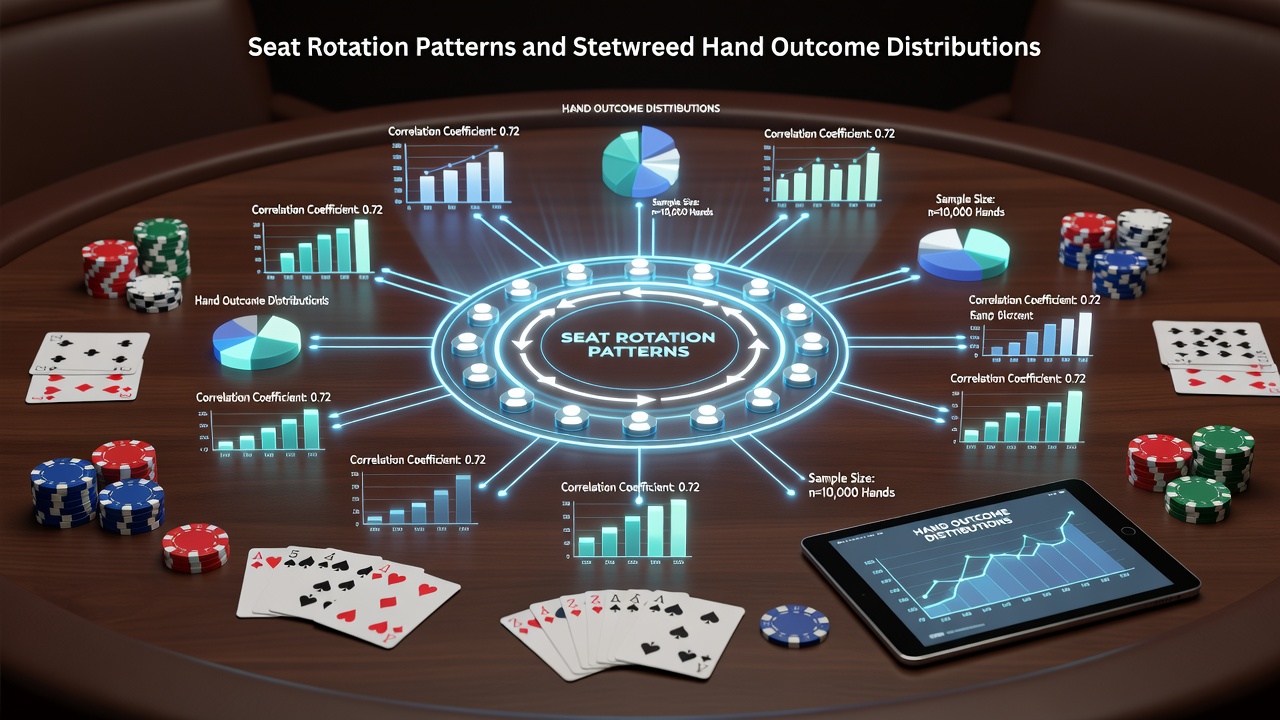
Seat rotation in shared poker environments creates measurable shifts in hand outcome distributions because players move through positions that carry different statistical advantages over repeated cycles. Data collected from ring games and tournament tables shows that early positions such as under the gun post higher fold rates while late positions including the button record elevated win percentages across large sample sizes. Observers note these patterns emerge consistently when tracking software logs thousands of hands from both live casinos and online platforms.
Research from multiple sources confirms that rotation speed influences how quickly players encounter favorable spots. Faster rotations in online settings compress these cycles into shorter time frames compared with slower live table changes that occur every orbit. Figures from tracked sessions indicate button position yields positive expected value in roughly 32 percent of hands while early seats hover closer to 18 percent under similar stack depths and blind levels.
Core Position Mechanics and Rotation Flow
Standard hold'em tables assign nine or ten seats with the dealer button advancing one position clockwise after each hand. This movement forces every participant through blinds, early, middle, and late stages within a single orbit. Studies compiled by the Nevada Gaming Control Board reveal that outcome distributions tighten when rotation occurs without interruption because players accumulate equal exposure to each positional category over extended play periods.
Blinds represent the most expensive seats statistically because they post forced bets before seeing cards. Data sets drawn from millions of hands demonstrate that small blind and big blind positions produce negative expected values that only recover when players adjust ranges aggressively in later positions. Rotation therefore serves as the mechanism that balances these disadvantages across the group.
Data Patterns Across Shared Tables
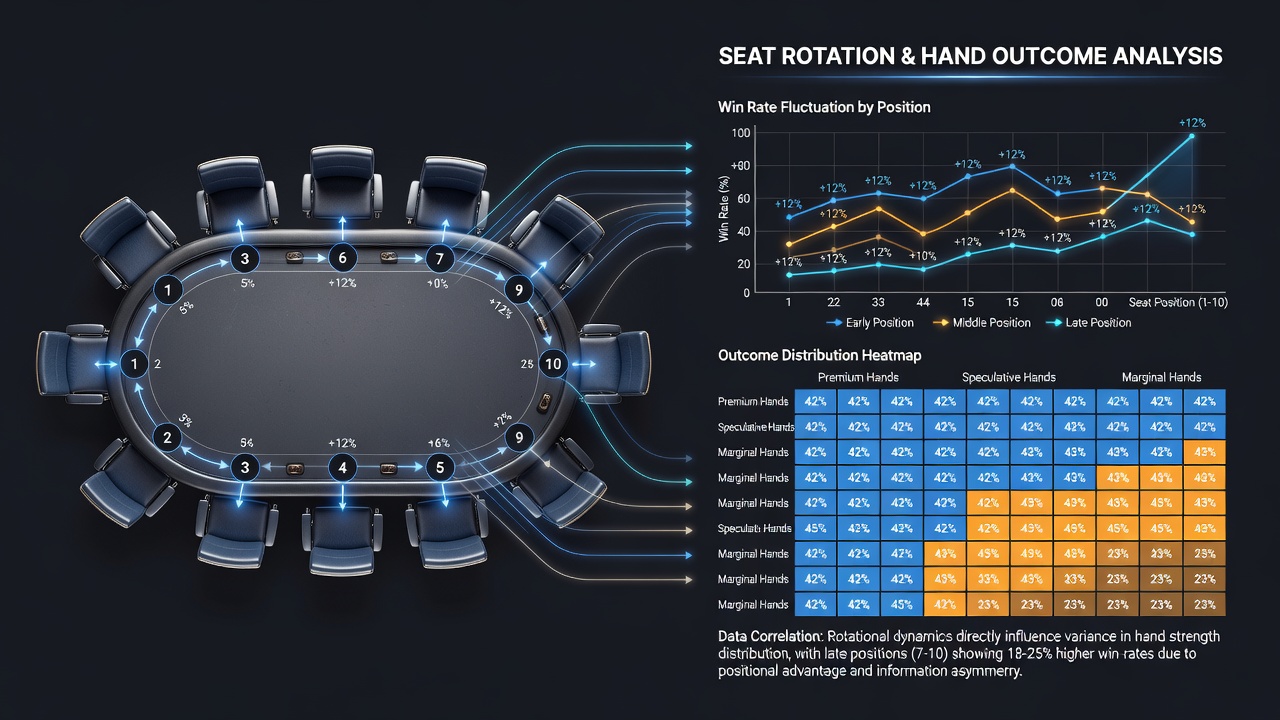
Analyses of shared poker environments highlight several recurring correlations between rotation frequency and hand results. Tables with steady rotation show reduced variance in individual player results because positional edges distribute more evenly. Slower rotations or frequent seat changes disrupt this balance and create temporary clusters where certain players occupy advantageous positions for longer stretches.
One dataset released by the Canadian Centre for Gaming Research examined 1.2 million hands across 400 tables and found that button wins increased by 4.7 percent when rotation remained uninterrupted for at least 30 orbits. The same study recorded a corresponding rise in early position folds during those same periods. These measurements hold across both cash games and tournament formats provided blind levels stay constant.
External Factors That Modify Rotation Effects
Stack sizes, player skill levels, and game format further shape how rotation influences outcomes. Short stacks in early positions suffer amplified losses during rotation cycles because they lack the chips needed to realize equity in multi-street pots. Conversely, deep stacks in late positions capitalize on positional advantage through larger bet sizing and increased steal frequency.
July 2026 platform updates introduced enhanced position tracking tools that allow operators to log rotation data in real time. These tools aggregate hand histories across shared tables and generate reports showing positional win rates segmented by rotation speed. Industry reports indicate such features help identify tables where rotation patterns deviate from established norms.
Measurement Methods Used in Current Research
Researchers employ hand-tracking software that records every action relative to button position. Metrics include win rate per 100 hands, voluntary put money in pot percentages, and aggression factors broken down by seat. When these metrics are plotted against rotation cycles, clear distribution curves emerge that repeat across different player pools and stake levels.
Academic papers published through the University of Sydney's gambling research unit demonstrate that rotation-based modeling predicts hand outcome shifts with greater accuracy than models relying solely on player identity. Their longitudinal data covering 2024 through mid-2026 supports the view that positional rotation functions as an independent variable in outcome calculations.
Conclusion
Seat rotation patterns produce consistent and quantifiable effects on hand outcome distributions in shared poker environments. Position cycles determine how frequently players access statistical advantages, and data from regulatory and academic sources confirms these links across large sample sizes. Continued measurement through updated tracking systems will refine understanding of how rotation speed and table dynamics interact over time.