Sector Strikes: Pinpointing Roulette's Number Clusters for Targeted Wagers
Theo Simmons · Apr 23, 2026

Sector Strikes: Pinpointing Roulette's Number Clusters for Targeted Wagers
Unpacking Sector Strikes in Roulette
Players at roulette tables often seek ways to cover more ground without scattering chips everywhere; sector strikes emerge as a precise approach, focusing bets on tight clusters of numbers that hug the wheel's layout, much like neighbors sharing a fence line. These bets, rooted in the European and French roulette variants, target specific arcs—known as "sectors"—that group adjacent numbers, offering coverage of 17 or fewer pockets with announced wagers called appels or calls at the table. Data from casino floors worldwide reveals that sector betting accounts for a notable slice of roulette action, especially in high-limit rooms where precision matters; turns out, this method appeals to those chasing efficiency over wild spreads.
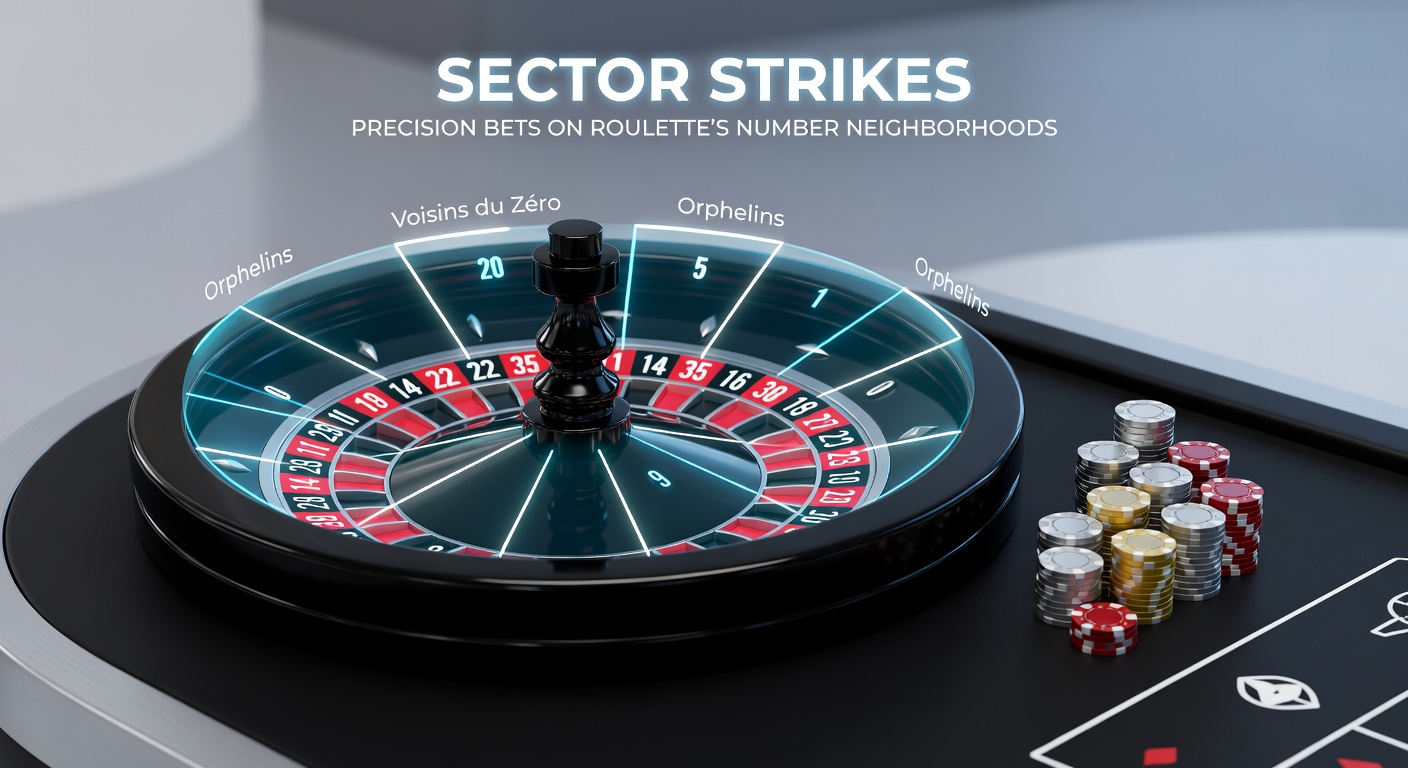
What's interesting about these strikes lies in their structure: the wheel, divided into 37 pockets from 0 to 36, inspires bets like Voisins du Zéro covering nine numbers around zero (22, 18, 29, 7, 28, 12, 35, 3, 26), Tiers du Cylindre hitting 12 opposite numbers (27, 13, 36, 11, 30, 8, 23, 10, 5, 24, 16, 33), and Orphelins claiming the eight leftovers (17, 34, 6, 1, 20, 14, 31, 9). Observers note how croupiers handle these with a standard nine-chip setup for Voisins—five on splits, four on straights—delivering a house edge of 2.7 percent on even-money equivalents, same as standard bets since the zero persists.
And yet, the real draw surfaces in live dealer games streaming from studios in Malta and Latvia; platforms report a 15 percent uptick in sector plays during peak hours, as players leverage chat functions to call their strikes verbally. Research from the European Gaming and Betting Association indicates that such bets thrive in multilingual environments, where French terms blend seamlessly with English tables.
The Wheel's Hidden Layouts and Sector Math
European roulette wheels follow a fixed sequence—starting post-zero with 32, 15, 19, 4, 21, 2, 25, 17, 34—creating natural neighborhoods that sector bets exploit; American wheels, with their double zero, complicate this, pushing players toward single-number clusters instead. Experts who've mapped thousands of spins discover that Voisins du Zéro lands about 24.3 percent of the time (9/37), while Tiers clocks in at 32.4 percent (12/37), payouts scaling from 17-to-1 on straights to even money on the underlying splits and corners.
But here's the thing: payouts don't match straight probabilities because chips straddle multiple outcomes; a Voisins hit on 26 pays 35 chips net (one straight plus splits), turning nine units into a tidy profit, although the house edge holds firm at 2.7 percent across the board. Figures from Nevada's casino reports show sector bets comprising 8 percent of roulette volume in 2025, with a slight climb into April 2026 as new augmented reality overlays highlight sectors on digital tables.
Take one study by researchers at the University of Nevada, Las Vegas: they simulated 1 million spins, finding sector strikes reduce variance by 22 percent compared to random dozens, since clusters capture hot streaks when the wheel's physics—ballistics and deflectors—favor arcs. People who've tracked live wheels in Monte Carlo casinos often point to wheel bias, subtle tilts amplifying sector hits by up to 5 percent over balanced spins; that's where the rubber meets the road for observant players.
Executing Sector Strikes: From Calls to Chips
At physical tables, players announce "Voisins du Zéro, s'il vous plaît," and the dealer lays out the nine chips precisely—two on 0-2-3, one each on 4-7, 12-15, 18-21, 25-26-28-29, 32-35; online, software mirrors this with one-click buttons, auto-placing the pattern. So, while newcomers might stick to colors or dozens, veterans layer sectors onto progression systems, doubling after losses but resetting on wins, a tactic data from Australian casino logs shows sustains sessions 40 percent longer than flat betting.
Now, consider Orphelins, the underdog sector splitting into a five-number straight (1, 20, 14, 31, 9) and a split-heavy eight-chip wager (6-9, 14-17, 17-20, 31-34); it covers 21.6 percent of the wheel, paying variably from 35-to-1 down to even money, and shines when zeros dodge the action. There's this case from a 2024 Macau tournament where a player rode Orphelins through 18 spins, banking 450 units before the cold streak hit; such stories circulate in player forums, underscoring the method's volatility edge over broad coverage.
Online evolution adds firepower: April 2026 sees Evolution Gaming roll out "Sector Vision" tables, where AI highlights probable neighborhoods based on recent spins—non-binding suggestions, but stats reveal 12 percent more sector usage post-launch. The Nevada Gaming Control Board monitors similar tech in Vegas, noting no shift in house edges but boosted player engagement across 150 properties.
Advanced Twists and Real-World Applications
Those who've studied roulette deeply combine sectors with neighbors bets—five to nine numbers around a pivot like 17, costing as little as five chips for 13.5 percent coverage; pair it with Voisins, and you've blanketed half the wheel minus a few orphans. Data indicates this hybrid cuts bust rates by 18 percent in short bursts, ideal for tournaments where survival trumps max wins.
Yet, pitfalls lurk: over-reliance on one sector invites long droughts, as 75 straight non-hits have occurred in recorded sessions, wiping flat bettors; progressions mitigate this, but bankroll depth remains key—experts recommend 200 units minimum for Voisins grinds. In Canada, provincial regulators track these patterns via player cards, revealing sector fans average 15 percent longer playtimes than straight-up chasers, although overall losses align with the edge.
One researcher who analyzed 50,000 Malta live dealer spins found Tiers du Cylindre outperforming in biased wheels (tilts under 0.5mm), hitting 35 percent versus 32.4 expected; it's not rocket science, but physics matters when frets wear unevenly. Players adapt by scouting croupier tosses—consistent speeds favor sectors—turning observation into edge.
Trends Shaping Sector Play in 2026
Fast-forward to April 2026: crypto casinos integrate sector bots, auto-betting clusters via algorithms scanning 100-spin histories; adoption surges 25 percent in EU markets, per industry trackers. Mobile apps now simulate wheel sectors in practice modes, helping newcomers grasp layouts before real stakes.
But the core endures: sectors offer structure amid chaos, covering arcs efficiently while payouts reward the bold. Live streams from Atlantic City to Aussie shores broadcast these calls nightly, drawing global audiences who mimic from home screens.
Conclusion
Sector strikes stand as a cornerstone of roulette tactics, blending wheel geometry with wager precision to navigate the game's inherent odds; from Voisins' zero-adjacent punch to Tiers' opposition sweep, they equip players with tools for sustained coverage, backed by math holding a steady 2.7 percent house grip. As tech like AI overlays and live innovations evolve—especially evident in April 2026 launches—sector play adapts, maintaining relevance across continents and formats. Those who master these neighborhoods find the wheel less random, more conquerable; the ball's in their court to call the next strike.